
 English
 Pусский


Cobertura de borracha
Rubber Sheeting: A Flexible Approach to Spatial Data Transformation Rubber sheeting is a geometric correction technique widely used in geographic information systems (GIS) and remote sensing to adjust spatial data for improved accuracy and alignment. This method is particularly useful when integrating datasets from different sources, correcting distortions, or aligning historical maps with modern geographic references. Concept and Purpose Rubber sheeting derives its name from the analogy of stretching a rubber sheet over a surface to fit specific control points. The process involves warping or transforming spatial data (e.g., vector maps, raster images) to match known reference points, ensuring better alignment between datasets. Unlike rigid transformations (e.g., rotation or scaling), rubber sheeting allows localized adjustments, accommodating non-uniform distortions caused by factors like sensor errors, paper shrinkage in scanned maps, or projection discrepancies. Key Steps in Rubber Sheeting 1. Control Point Selection: Identical features (e.g., road intersections, landmarks) are marked as control points in both the source and target datasets. These serve as anchors for the transformation. 2. Transformation Model: A mathematical model (e.g., affine, polynomial, or spline-based) is applied to interpolate displacements between control points. The choice of model depends on the complexity of distortions. 3. Warping Execution: The software stretches or compresses the source data to align control points with their counterparts in the target dataset, while smoothly adjusting surrounding features. 4. Quality Assessment: Residual errors are evaluated to ensure minimal distortion in areas without control points. Applications - Map Conflation: Aligning outdated maps with current GIS layers for urban planning or archaeological studies. - Image Georeferencing: Correcting aerial or satellite imagery to match ground coordinates. - Cadastral Updates: Adjusting property boundaries in land registries to reflect surveyed data. Advantages and Limitations Rubber sheeting offers flexibility in handling localized distortions, making it superior to uniform transformations. However, its accuracy depends heavily on the quantity and distribution of control points. Over-stretching may introduce artifacts in areas with sparse control points, requiring manual intervention. Conclusion Rubber sheeting is an indispensable tool for spatial data refinement, enabling seamless integration of heterogeneous datasets. By balancing precision and adaptability, it supports diverse applications in cartography, environmental monitoring, and infrastructure management. As GIS technology evolves, rubber sheeting remains a foundational method for ensuring data consistency and reliability.
Produto
Categoria:
-
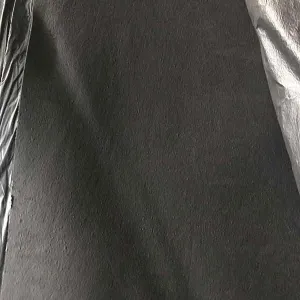
Filme bruto de borracha
Sua classificação: Filme BrutoVistas: 9Número:Tempo de liberação: 2025-12-17 14:53:49Os filmes de borracha bruta são normalmente feitos de borracha natural ou compostos de borracha sintética, como borracha de estireno-butadieno (SBR), neoprene, borracha butílica e EPDM (monômero de etileno propileno dieno), cada um oferecendo propriedades distintas adequadas para aplicações específicas. Os filmes de borracha bruta podem ser sólidos ou ter vários aditivos para melhorar o desempenho, incluindo cargas, plastificantes e agentes de cura.
Notícias
Categoria:
-
[Industry News]Como colar e colar folhas de borracha em diferentes superfíc...
2025-12-18 13:52:50 -
[FAQ]Projetos DIY usando folhas de borracha para casa e jardim
2025-12-18 15:00:16 -
[FAQ]Projetos DIY usando folhas de borracha para casa e jardim
2025-12-18 15:00:16
Caso
Categoria:
Nenhum resultado de pesquisa!
Vídeo
Categoria:
Nenhum resultado de pesquisa!
Download
Categoria:
Nenhum resultado de pesquisa!
Recrutamento
Categoria:
Nenhum resultado de pesquisa!
Produtos recomendados
Nenhum resultado de pesquisa!



 Whatsapp
 Telefone